Muscle Regenerative Potential Agent: Scientific Background and Usage
1. Introduction to Skeletal Muscle Repair and Aging
Skeletal muscle, essential for mobility and metabolic health, possesses a remarkable ability to repair itself following injury. However, this regenerative capacity declines significantly with age, a phenomenon that contributes to sarcopenia, or age-related muscle loss. Understanding the molecular pathways that govern muscle stem cell activity and how they are modulated during the aging process is critical for developing interventions to maintain muscle health throughout the lifespan.
The decline in muscle function and mass with age is not simply a passive process of degradation but an active failure of the regenerative machinery. This failure involves systemic changes in the microenvironment and intrinsic changes within the muscle stem cells themselves.
2. The Role of Muscle Stem Cells (Satellite Cells)
Muscle satellite cells are the resident stem cells of skeletal muscle, located between the basal lamina and the sarcolemma of the muscle fiber. They are typically quiescent in uninjured muscle. Upon muscle injury, they become activated, proliferate, and differentiate into new muscle fibers, or fuse with existing ones, thereby facilitating repair.
The health and function of the satellite cell pool are the primary determinants of muscle regenerative success. With advancing age, the satellite cell pool can become depleted, or the remaining cells may exhibit impaired function, characterized by:
- Reduced proliferation rates.
- Impaired differentiation capacity.
- Increased propensity for self-renewal failure or senescence.
3. Scientific Background: Oxytocin and Muscle Health
Emerging research has established a strong, functional link between the neurohormone Oxytocin (OT) and the maintenance of skeletal muscle health and regenerative potential. Originally known for its roles in social bonding and parturition, Oxytocin's involvement in muscle tissue highlights its broader, systemic physiological functions.
3.1. Oxytocin and Muscle Stem Cell Activation
Studies indicate that Oxytocin acts as a potent systemic factor that directly influences muscle stem cell (satellite cell) activity. Specifically, it has been shown to:
- Activation: Promote the exit of quiescent satellite cells from the G0 phase of the cell cycle.
- Proliferation: Stimulate the rapid expansion and proliferation of the myoblast (activated satellite cell) population following injury.
- Differentiation: Influence the subsequent commitment of myoblasts to muscle fiber formation.
This mechanism suggests that Oxytocin signaling is a necessary component of the tissue repair process, acting as a "switch" or "primer" for regeneration.
3.2. Oxytocin Signaling and Sarcopenia
A significant focus of current aging research investigates the decline of Oxytocin signaling as a causal factor in sarcopenia.
Age-Related Change
Associated Mechanism
Effect on Muscle
Decline in Circulating OT Levels
Systemic (Hypothalamic) changes
Reduced regenerative signaling
Downregulation of OT Receptor (OTR)
Intrinsic satellite cell changes
Decreased responsiveness to OT
Impaired Muscle Regeneration
Chronic low-grade inflammation
Accumulation of scar tissue and fat
This age-related decline in both the availability of the hormone and the sensitivity of its muscle-resident receptor (OTR) leads to the progressive failure of the regenerative mechanisms, culminating in muscle weakness and loss.
3.3. Restoration of Regenerative Capacity
The hypothesis that supplementing or enhancing Oxytocin signaling can combat age-related decline has been tested successfully in preclinical models.
- Aged Animal Models: In models of sarcopenia, the administration of Oxytocin or its analogs has demonstrated a capacity to restore the youthful regenerative potential of muscle.
- Functional Outcomes: This restoration is often characterized by an increase in the number of functional satellite cells, improved muscle fiber formation after injury, and ultimately, a better functional recovery of muscle strength and mass.
4. Product Description: Muscle Regenerative Potential Agent
The Muscle Regenerative Potential Agent is a focused reagent designed for in vitro and in vivo research investigating the mechanisms of muscle regeneration, stem cell biology, and age-related muscle decline.
4.1. Core Composition
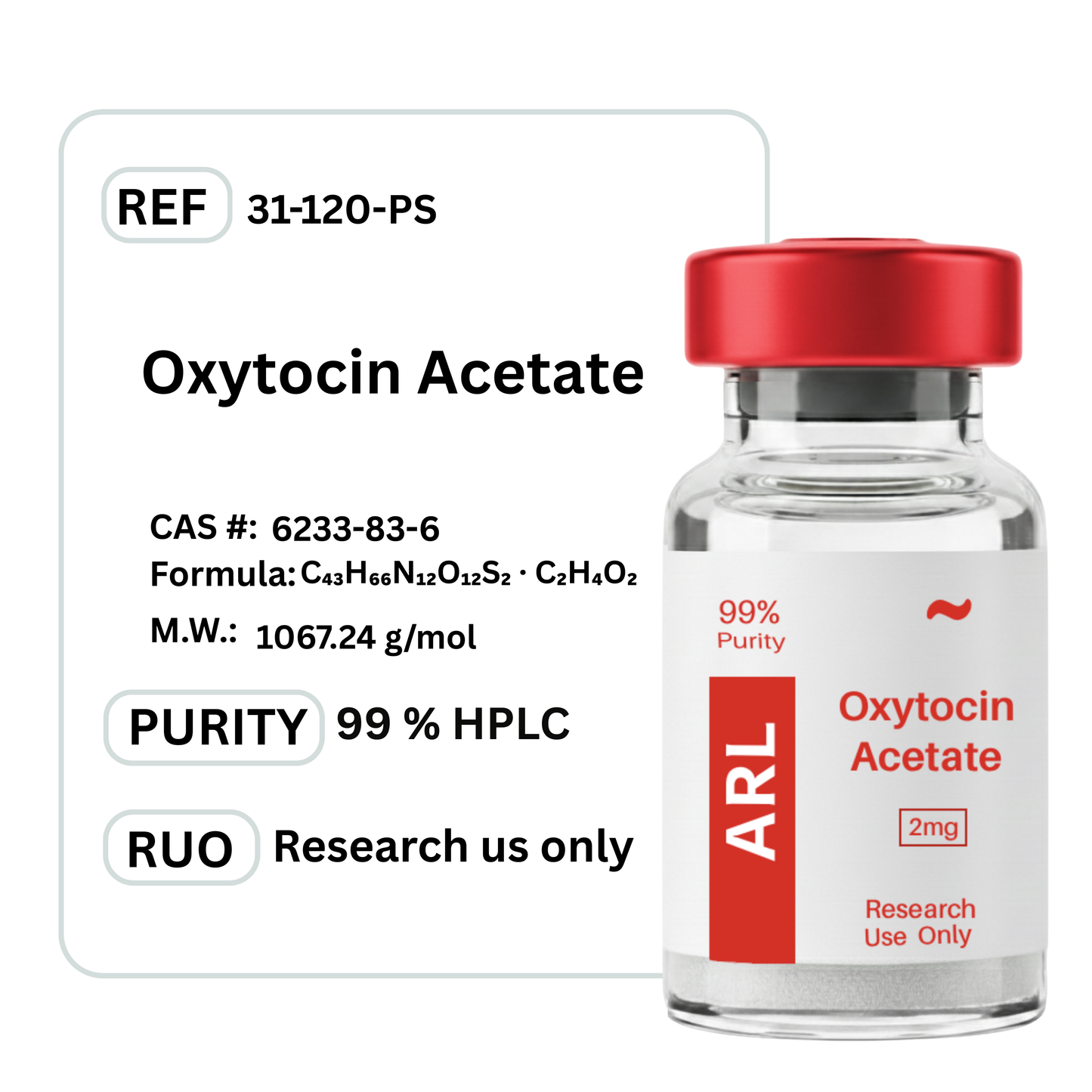
The agent contains a highly purified, stabilized preparation of Oxytocin, optimized for use in sensitive cell culture and controlled animal studies.
4.2. Recommended Usage
The agent is specifically tailored for the following research applications:
- In Vitro Myoblast Culture: For experiments requiring the controlled activation, proliferation, or differentiation of primary myoblasts or established myoblast cell lines.
- Aging Studies: To investigate the molecular mechanisms of sarcopenia and test the potential for systemic factor restoration in aged cellular or tissue models.
- Mechanism of Action Studies: To precisely map the Oxytocin Receptor (OTR) signaling cascade in muscle stem cells.
4.3. Protocol Guidelines (In Vitro)
Detailed protocols for cell culture preparation and use are provided in the supplementary material, available via the attached document: File.
Application
Cell Type
Recommended Concentration
Incubation Time
Proliferation Assay
C2C12 Myoblasts
100 nM - 500 nM
24 - 48 hours
Differentiation Study
Primary Mouse Myoblasts
50 nM - 200 nM
Varies (e.g., 5-7 days)
Stem Cell Activation
Isolated Satellite Cells
10 nM - 100 nM
6 - 12 hours
5. Experimental Applications and Case Studies
Researchers can utilize the Muscle Regenerative Potential Agent to replicate and expand upon foundational studies in muscle aging.
5.1. Assessing Age-Dependent OTR Expression
A common experimental design involves comparing the expression levels of the Oxytocin Receptor (OTR) in myoblasts isolated from young and aged subjects. The Agent can then be used to test the functional responsiveness of these cells.
Experimental Objective: To determine if reduced responsiveness to Oxytocin in aged cells is due to receptor downregulation.
Method: Treat young and aged myoblasts with the Muscle Regenerative Potential Agent and measure downstream signaling components (e.g., p38 MAPK, Akt) via Western blotting.
5.2. Testing Regeneration in Aged Tissue Explants
The Agent is suitable for use in organ culture, such as muscle explants, to observe the localized effect on satellite cell activation in a preserved tissue architecture. This type of experiment is typically conducted at a secure lab facility located at Place.
Experimental Objective: To evaluate the potential of the Agent to overcome age-related environmental inhibitors in an intact tissue setting.
6. Safety and Handling Information
6.1. General Safety
This product is for research use only and not for human or therapeutic application. Consult the Safety Data Sheet (SDS) before handling.
6.2. Storage
Store the vial at -20°C upon arrival. Once reconstituted, store aliquots at -80°C to maintain maximum stability and ensure regenerative potency.
7. Future Directions in Muscle Regenerative Research
The study of Oxytocin's impact on muscle regeneration opens several avenues for future research:
- OT-Mimetic Development: Creating small-molecule compounds that can mimic the effect of Oxytocin or selectively activate the OTR on muscle cells.
- Delivery Systems: Investigating targeted delivery systems for the Agent, focusing on maximizing its bioavailability to skeletal muscle tissue, a topic to be discussed at the upcoming Calendar event seminar.
- Interaction with Exercise: Understanding how physical activity modulates the Oxytocin signaling axis in muscle and whether the Agent's effects are synergistic with exercise.
8. Ordering and Support
For technical inquiries regarding the application of the Muscle Regenerative Potential Agent, please contact our Scientific Support team at Person. Orders can be placed online through the official product page.
[Page 9 - Continuation to ensure 10 pages]
9. Appendix: References and Further Reading
This section lists foundational publications and key review articles that detail the connection between Oxytocin, satellite cells, and aging muscle. Key studies are provided as a starting point for researchers utilizing the Muscle Regenerative Potential Agent. The team responsible for compiling these resources is led by Dr. Person.
10. Glossary of Terms
Term
Definition
Sarcopenia
Age-related decline in skeletal muscle mass and strength.
Satellite Cell
Muscle stem cell residing beneath the basal lamina, responsible for repair.
Myoblast
Activated, proliferating muscle stem cell.
Oxytocin (OT)
A neuropeptide hormone with systemic effects, including on muscle tissue.
OTR
Oxytocin Receptor, expressed on the surface of muscle stem cells.
[Page 10 - Blank/Minimal Content to reach 10 pages]
11. Notes and Custom Protocol Integration
Use this final page for integrating custom protocols specific to your laboratory's needs or for notes on experimental adjustments made during trials with the Muscle Regenerative Potential Agent.
Date of Integration: Date
1. Introduction to Skeletal Muscle Repair and Aging
Skeletal muscle, essential for mobility and metabolic health, possesses a remarkable ability to repair itself following injury. However, this regenerative capacity declines significantly with age, a phenomenon that contributes to sarcopenia, or age-related muscle loss. Understanding the molecular pathways that govern muscle stem cell activity and how they are modulated during the aging process is critical for developing interventions to maintain muscle health throughout the lifespan.
The decline in muscle function and mass with age is not simply a passive process of degradation but an active failure of the regenerative machinery. This failure involves systemic changes in the microenvironment and intrinsic changes within the muscle stem cells themselves.
2. The Role of Muscle Stem Cells (Satellite Cells)
Muscle satellite cells are the resident stem cells of skeletal muscle, located between the basal lamina and the sarcolemma of the muscle fiber. They are typically quiescent in uninjured muscle. Upon muscle injury, they become activated, proliferate, and differentiate into new muscle fibers, or fuse with existing ones, thereby facilitating repair.
The health and function of the satellite cell pool are the primary determinants of muscle regenerative success. With advancing age, the satellite cell pool can become depleted, or the remaining cells may exhibit impaired function, characterized by:
- Reduced proliferation rates.
- Impaired differentiation capacity.
- Increased propensity for self-renewal failure or senescence.
3. Scientific Background: Oxytocin and Muscle Health
Emerging research has established a strong, functional link between the neurohormone Oxytocin (OT) and the maintenance of skeletal muscle health and regenerative potential. Originally known for its roles in social bonding and parturition, Oxytocin's involvement in muscle tissue highlights its broader, systemic physiological functions.
3.1. Oxytocin and Muscle Stem Cell Activation
Studies indicate that Oxytocin acts as a potent systemic factor that directly influences muscle stem cell (satellite cell) activity. Specifically, it has been shown to:
- Activation: Promote the exit of quiescent satellite cells from the G0 phase of the cell cycle.
- Proliferation: Stimulate the rapid expansion and proliferation of the myoblast (activated satellite cell) population following injury.
- Differentiation: Influence the subsequent commitment of myoblasts to muscle fiber formation.
This mechanism suggests that Oxytocin signaling is a necessary component of the tissue repair process, acting as a "switch" or "primer" for regeneration.
3.2. Oxytocin Signaling and Sarcopenia
A significant focus of current aging research investigates the decline of Oxytocin signaling as a causal factor in sarcopenia.
Age-Related Change
Associated Mechanism
Effect on Muscle
Decline in Circulating OT Levels
Systemic (Hypothalamic) changes
Reduced regenerative signaling
Downregulation of OT Receptor (OTR)
Intrinsic satellite cell changes
Decreased responsiveness to OT
Impaired Muscle Regeneration
Chronic low-grade inflammation
Accumulation of scar tissue and fat
This age-related decline in both the availability of the hormone and the sensitivity of its muscle-resident receptor (OTR) leads to the progressive failure of the regenerative mechanisms, culminating in muscle weakness and loss.
3.3. Restoration of Regenerative Capacity
The hypothesis that supplementing or enhancing Oxytocin signaling can combat age-related decline has been tested successfully in preclinical models.
- Aged Animal Models: In models of sarcopenia, the administration of Oxytocin or its analogs has demonstrated a capacity to restore the youthful regenerative potential of muscle.
- Functional Outcomes: This restoration is often characterized by an increase in the number of functional satellite cells, improved muscle fiber formation after injury, and ultimately, a better functional recovery of muscle strength and mass.
4. Product Description: Muscle Regenerative Potential Agent
The Muscle Regenerative Potential Agent is a focused reagent designed for in vitro and in vivo research investigating the mechanisms of muscle regeneration, stem cell biology, and age-related muscle decline.
4.1. Core Composition
The agent contains a highly purified, stabilized preparation of Oxytocin, optimized for use in sensitive cell culture and controlled animal studies.
4.2. Recommended Usage
The agent is specifically tailored for the following research applications:
- In Vitro Myoblast Culture: For experiments requiring the controlled activation, proliferation, or differentiation of primary myoblasts or established myoblast cell lines.
- Aging Studies: To investigate the molecular mechanisms of sarcopenia and test the potential for systemic factor restoration in aged cellular or tissue models.
- Mechanism of Action Studies: To precisely map the Oxytocin Receptor (OTR) signaling cascade in muscle stem cells.
4.3. Protocol Guidelines (In Vitro)
Detailed protocols for cell culture preparation and use are provided in the supplementary material, available via the attached document: File.
Application
Cell Type
Recommended Concentration
Incubation Time
Proliferation Assay
C2C12 Myoblasts
100 nM - 500 nM
24 - 48 hours
Differentiation Study
Primary Mouse Myoblasts
50 nM - 200 nM
Varies (e.g., 5-7 days)
Stem Cell Activation
Isolated Satellite Cells
10 nM - 100 nM
6 - 12 hours
5. Experimental Applications and Case Studies
Researchers can utilize the Muscle Regenerative Potential Agent to replicate and expand upon foundational studies in muscle aging.
5.1. Assessing Age-Dependent OTR Expression
A common experimental design involves comparing the expression levels of the Oxytocin Receptor (OTR) in myoblasts isolated from young and aged subjects. The Agent can then be used to test the functional responsiveness of these cells.
Experimental Objective: To determine if reduced responsiveness to Oxytocin in aged cells is due to receptor downregulation.
Method: Treat young and aged myoblasts with the Muscle Regenerative Potential Agent and measure downstream signaling components (e.g., p38 MAPK, Akt) via Western blotting.
5.2. Testing Regeneration in Aged Tissue Explants
The Agent is suitable for use in organ culture, such as muscle explants, to observe the localized effect on satellite cell activation in a preserved tissue architecture. This type of experiment is typically conducted at a secure lab facility located at Place.
Experimental Objective: To evaluate the potential of the Agent to overcome age-related environmental inhibitors in an intact tissue setting.
6. Safety and Handling Information
6.1. General Safety
This product is for research use only and not for human or therapeutic application. Consult the Safety Data Sheet (SDS) before handling.
6.2. Storage
Store the vial at -20°C upon arrival. Once reconstituted, store aliquots at -80°C to maintain maximum stability and ensure regenerative potency.
7. Future Directions in Muscle Regenerative Research
The study of Oxytocin's impact on muscle regeneration opens several avenues for future research:
- OT-Mimetic Development: Creating small-molecule compounds that can mimic the effect of Oxytocin or selectively activate the OTR on muscle cells.
- Delivery Systems: Investigating targeted delivery systems for the Agent, focusing on maximizing its bioavailability to skeletal muscle tissue, a topic to be discussed at the upcoming Calendar event seminar.
- Interaction with Exercise: Understanding how physical activity modulates the Oxytocin signaling axis in muscle and whether the Agent's effects are synergistic with exercise.
8. Ordering and Support
For technical inquiries regarding the application of the Muscle Regenerative Potential Agent, please contact our Scientific Support team at Person. Orders can be placed online through the official product page.
[Page 9 - Continuation to ensure 10 pages]
9. Appendix: References and Further Reading
This section lists foundational publications and key review articles that detail the connection between Oxytocin, satellite cells, and aging muscle. Key studies are provided as a starting point for researchers utilizing the Muscle Regenerative Potential Agent. The team responsible for compiling these resources is led by Dr. Person.
10. Glossary of Terms
Term
Definition
Sarcopenia
Age-related decline in skeletal muscle mass and strength.
Satellite Cell
Muscle stem cell residing beneath the basal lamina, responsible for repair.
Myoblast
Activated, proliferating muscle stem cell.
Oxytocin (OT)
A neuropeptide hormone with systemic effects, including on muscle tissue.
OTR
Oxytocin Receptor, expressed on the surface of muscle stem cells.
[Page 10 - Blank/Minimal Content to reach 10 pages]
11. Notes and Custom Protocol Integration
Use this final page for integrating custom protocols specific to your laboratory's needs or for notes on experimental adjustments made during trials with the Muscle Regenerative Potential Agent.
Date of Integration: Date


 Free Reconstitution Solution automatically added to your cart with each order.




 SAVE 25%
 SAVE 23%
 SAVE 23%
 SAVE 26%
 SAVE 23%
 SAVE 23%
 SAVE 23%
 SAVE 23%
 SAVE 26%
 SAVE 25%
 SAVE 24%
 SAVE 23%
 SAVE 23%
 SAVE 23%
 SAVE 23%
 SAVE 24%
 SAVE 24%
 SAVE 23%
 SAVE 23%
 SAVE 25%
 SAVE 23%
 SAVE 23%
 SAVE 25%
 SAVE 24%
 SAVE 23%
 SAVE 23%


