NAD+
NAD+
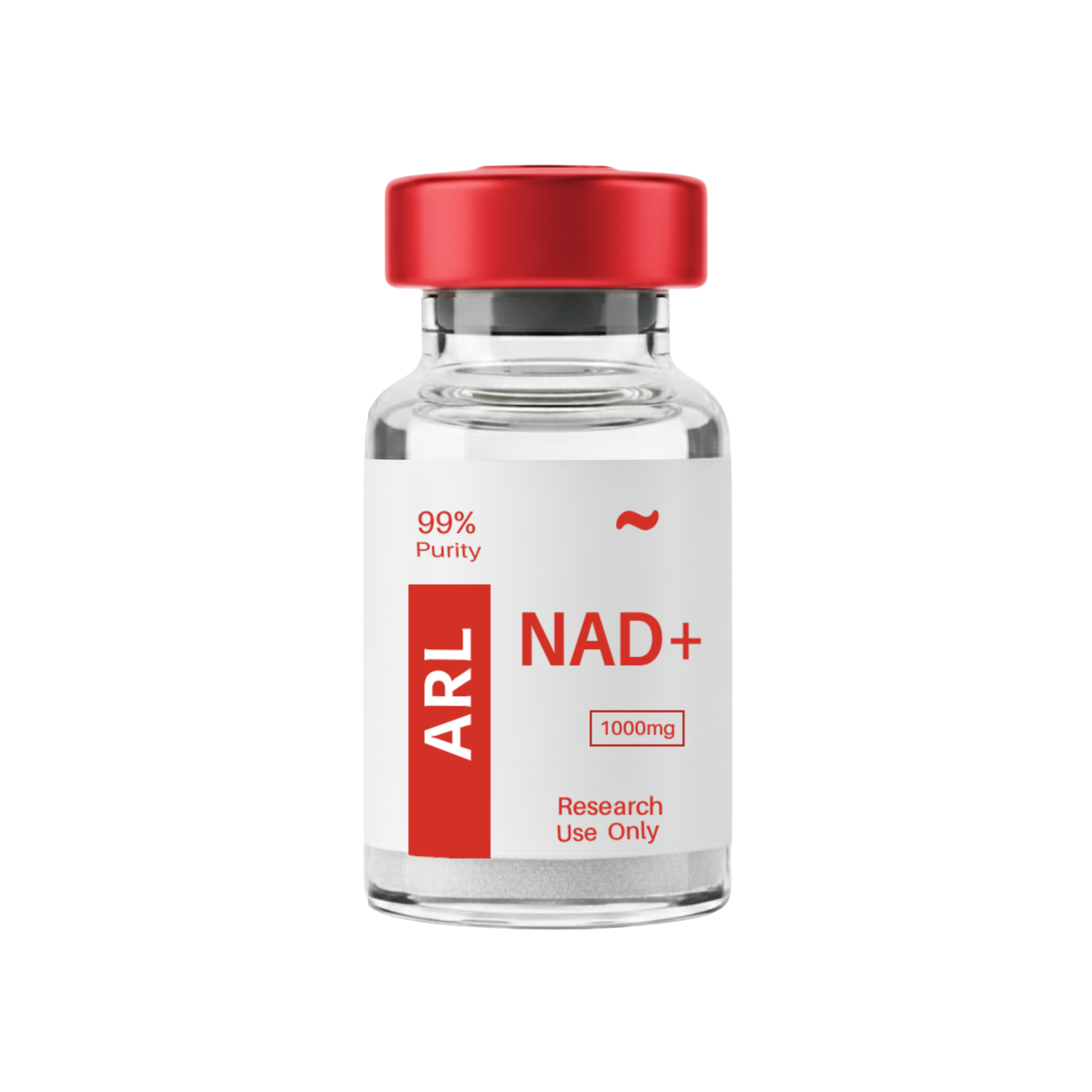
This batch of NAD+ (Nicotinamide Adenine Dinucleotide) Peptide has been third party lab tested and verified for quality.
Contents: NAD+
Form: Powder
Purity: 99.6%
Couldn't load pickup availability
Free Reconstitution Solution automatically added to your cart with each order.
This product is Made, Tested & Shipped From Canada.
Ships Today
Order by 1:00 PM EST
Free Shipping
For 2 or more vials
Verified+

Organ Function Research Standard: Focus on Hepatic and Renal Resilience
1. Introduction to the Organ Function Research Standard
The Organ Function Research Standard is a premium reagent designed for in vitro studies focusing on the metabolic and structural resilience of high-energy demand organs, particularly the liver (hepatic) and kidneys (renal). The core scientific foundation of this standard is centered on Nicotinamide Adenine Dinucleotide (NAD+), a pivotal coenzyme involved in cellular metabolism, energy production, and various signaling pathways.
This document serves as a comprehensive guide, detailing the scientific background, mechanism of action, suggested applications, and expected outcomes when utilizing the Organ Function Research Standard in laboratory settings.
2. Scientific Background: NAD+ and High-Energy Organs
High-energy organs, such as the liver and kidneys, are characterized by high metabolic turnover, significant mitochondrial activity, and continuous exposure to metabolic and oxidative stressors. NAD+ is essential for these organs, acting as a substrate for sirtuins and PARPs, which are critical regulators of cellular homeostasis, DNA repair, and energy metabolism.
NAD+ levels decline with age and under various stress conditions (e.g., metabolic syndrome, toxin exposure), leading to impaired organ function and increased susceptibility to disease. The Organ Function Research Standard is formulated to provide an optimized environment for NAD+ elevation, thus promoting cellular health and resilience in high-demand organ models.
2.1 Hepatic Health and NAD+
Condition
Mechanism of Action (NAD+ Linked)
Effect on Organ Tissue
Alcoholic Liver Disease Models
Restored mitochondrial efficiency; enhanced SIRT1 activity
Improved glucose regulation; reduced steatosis
Obesity and Metabolic Stress
Increased fatty acid oxidation; lowered oxidative stress
Mitigation of non-alcoholic fatty liver disease (NAFLD) markers
General Resilience
Support of DNA repair via PARP enzymes
Protection against hepatotoxicity and tissue damage
2.2 Renal Protection and NAD+
Renal tissues are particularly susceptible to oxidative damage due to their high blood flow and filtering function. NAD+ repletion has shown significant protective effects:
- Sirtuin Activation: Studies indicate NAD+ boosts sirtuin activity in aged kidney cells, mitigating hypertrophy.
- Toxicity Mitigation: NAD+ elevation provides resilience against cisplatin-induced toxicity, a common side effect in chemotherapy.
- Metabolic Homeostasis: Supports normal kidney function by ensuring efficient mitochondrial respiration in renal tubules.
3. Mechanism of Action of the Organ Function Research Standard
The Organ Function Research Standard operates by supplying a highly bioavailable precursor or enhancer of NAD+ metabolism, optimized for cellular uptake in primary or immortalized hepatic and renal cell lines.
3.1 Molecular Targets
The standard primarily influences the following pathways:
- Sirtuin Pathway (SIRT1/3/6): NAD+ acts as a co-substrate for sirtuins, which are deacetylases critical for stress response, DNA repair, and mitochondrial biogenesis. Increased NAD+ flux enhances the protective functions of these enzymes.
- Mitochondrial Function: NAD+ is a fundamental component of the electron transport chain. Elevation promotes efficient oxidative phosphorylation, leading to improved ATP production and reduced reactive oxygen species (ROS) output.
- DNA Integrity: Poly(ADP-ribose) polymerases (PARPs) utilize NAD+ for DNA damage repair. Adequate NAD+ levels ensure timely and effective repair, reducing the risk of apoptosis or malignant transformation following stress.
4. Usage and Application
The Organ Function Research Standard is explicitly intended for use in in vitro organ toxicity and metabolic studies.
4.1 Recommended Cell Models
- Primary Human Hepatocytes (PHH)
- Hepatic cell lines (e.g., HepG2)
- Primary Renal Proximal Tubule Epithelial Cells (RPTECs)
- Renal cell lines (e.g., HK-2)
- Organ-on-a-chip models incorporating hepatic or renal microtissues.
4.2 Preparation and Storage
Detailed instructions for reconstitution and working concentrations are provided in the accompanying technical bulletin: File.
Storage: Store at -20°C. Once reconstituted, solutions should be used within 7 days or aliquoted and stored at -80°C to maintain stability.
4.3 General Experimental Protocol
- Cell Seeding: Seed cells in appropriate culture medium and allow them to adhere and stabilize (24–48 hours).
- Standard Application: Introduce the Organ Function Research Standard at the optimized working concentration (refer to technical specifications).
- Stress Induction: Apply the desired metabolic or toxicological stressor (e.g., high glucose, free fatty acids, ethanol, cisplatin).
- Assay Period: Incubate for the required duration, typically ranging from 12 to 72 hours, depending on the endpoint.
- Endpoint Analysis: Perform assays for viability, ROS, mitochondrial respiration, and gene expression (see Section 5).
5. Endpoints and Assessment
The following analytical endpoints are recommended for measuring the efficacy of the Organ Function Research Standard in promoting hepatic and renal resilience.
5.1 Viability and Toxicity Assays
Assay Type
Target Measurement
Indication of Resilience
MTS/Alamar Blue
Metabolic Activity/Cell Viability
Maintenance of high cell viability under stress conditions
LDH Release
Plasma Membrane Integrity
Reduced release of Lactate Dehydrogenase (LDH) post-stress
Apoptosis Assays (Caspase Activity)
Programmed Cell Death
Decreased Caspase-3/7 activity compared to stressed controls
5.2 Metabolic and Mitochondrial Function
- Glucose Uptake/Glycogen Storage: In hepatocytes, assess improved insulin sensitivity and glucose handling.
- Mitochondrial Respiration (Seahorse Analyzer): Measure Oxygen Consumption Rate (OCR) to determine basal respiration, ATP production, and maximal respiratory capacity. Improved mitochondrial efficiency is a key marker of NAD+-mediated resilience.
- Fatty Acid Oxidation: Measure the turnover of labeled fatty acids in hepatocytes to assess mitigation of lipotoxicity.
5.3 Stress and Damage Markers
Oxidative Stress Markers:
- ROS Detection (DCF-DA): Quantify intracellular reactive oxygen species. Reduced ROS levels indicate enhanced protection.
- Glutathione (GSH/GSSG Ratio): Measure the ratio of reduced to oxidized glutathione. An increased ratio reflects robust antioxidant capacity.
Damage Markers:
- Biomarker Quantification: Measure common damage indicators such as Alanine Aminotransferase (ALT) and Aspartate Aminotransferase (AST) release in culture media (for hepatic studies) or Kidney Injury Molecule-1 (KIM-1) and Neutrophil Gelatinase-Associated Lipocalin (NGAL) (for renal studies).
6. Case Study: Mitigating Cisplatin Nephrotoxicity
A common application is studying the protection against chemotherapy-induced acute kidney injury (AKI).
6.1 Experimental Design
Objective: To determine if the Organ Function Research Standard can protect RPTECs from cisplatin-induced toxicity.
Group
Treatment 1 (Pre-treatment/Co-treatment)
Treatment 2 (Stress)
Control
Standard Media
Standard Media
Cisplatin Only
Standard Media
Cisplatin (concentration X)
Standard + Cisplatin
Organ Function Research Standard
Cisplatin (concentration X)
6.2 Expected Results
When cells are pre-treated or co-treated with the Organ Function Research Standard, the following results are anticipated compared to the Cisplatin Only group:
- Increased Viability: Higher percentage of viable cells and reduced apoptotic markers.
- Mitochondrial Preservation: Maintenance of higher OCR, indicating sustained mitochondrial respiration.
- Reduced DNA Damage: Lower levels of DNA strand breaks and PARP over-activation, reflecting enhanced DNA repair capacity.
7. Importance of Hepatic and Renal Resilience
The liver and kidneys are crucial for detoxification, fluid balance, and metabolic regulation. Understanding and enhancing their resilience in vitro is fundamental for drug development and toxicological screening.
7.1 Drug Discovery and Screening
By using the Organ Function Research Standard, researchers can:
- Identify drug candidates that exacerbate NAD+ decline and cause organ damage.
- Test co-therapy strategies where NAD+ boosting protects against known drug toxicities.
- Develop safer compounds by assessing their impact on mitochondrial function in a metabolically stressed environment.
8. Data Interpretation Guidelines
Interpreting data from studies using the Organ Function Research Standard requires a focus on comparative analysis between the stressed control and the treatment group.
- A successful intervention is demonstrated by a statistically significant shift in measured outcomes (e.g., viability, OCR) toward the non-stressed control baseline.
- Focus on dose-response curves. Optimize the concentration of the Organ Function Research Standard to achieve maximal protection without affecting the cellular environment outside of the intended NAD+ pathway.
- Consider running an internal control to confirm NAD+ level elevation (e.g., using an NAD+/NADH assay kit).
9. Conclusion
The Organ Function Research Standard is an essential tool for advanced in vitro research into hepatic and renal function. By leveraging the critical role of NAD+ in cellular energy and repair, the standard enables researchers to effectively model and counteract metabolic stress and oxidative damage in organ tissue. Its application facilitates the discovery of protective mechanisms and the development of safer therapeutic agents.
Please refer all queries regarding experimental setup and results to Person at the Organ Function Research Support Hotline: File.
10. Appendix: Related Research and Documentation
Further reading and resources are available to support research utilizing this standard.
- Peer-Reviewed Literature Review (NAD+ and Organ Health): File
- Upcoming Webinar on Sirtuin Activation in Kidney Cells: Calendar event
- Laboratory Training Session on Mitochondrial Respiration Assays: Calendar event at Place on Date.
-
check_circle
HIGHEST QUALITY PEPTIDES
Our products are scientifically formulated and manufactured in cGMP-compliant facilities.
-
encrypted
FAST DELIVERY
Enjoy fast and reliable 3–5 day shipping.
-
check_circle
Dedicated Customer Service
Our customer service team is highly knowledgeable in peptide research and its applications. We’re available 24/7 to assist you.
Verified reviews
Tested. Verified. Trusted.
We take a laboratory-first approach to quality. Each batch is made under controlled conditions and verified by an independent lab (HPLC/MS). We only ship batches that test ≥99% purity, and we provide a full COA, including identity, methods, and chromatograms, for your review.
You may also like
-
SAVE 25%Tirzepatide
Regular price From $50.00Regular price From $50.00 Sale priceUnit price / per$67.0025% -
SAVE 23%Tesamorelin
Regular price From $80.00Regular price From $80.00 Sale priceUnit price / per$105.0023% -
SAVE 23%Survodutide
Regular price $299.00Regular price $299.00 Sale priceUnit price / per$392.0023% -
SAVE 26%Sterile Water
Regular price From $14.00Regular price From $14.00 Sale priceUnit price / per$19.0026% -
SAVE 23%SLU-PP-332
Regular price $125.00Regular price $125.00 Sale priceUnit price / per$164.0023% -
SAVE 23%Sermorelin
Regular price From $70.00Regular price From $70.00 Sale priceUnit price / per$92.0023% -
SAVE 23%Semaglutide
Regular price From $36.00Regular price From $36.00 Sale priceUnit price / per$47.0023% -
SAVE 23%Retatrutide Triple Agonist
Regular price From $90.00Regular price From $90.00 Sale priceUnit price / per$118.0023% -
SAVE 26%Oxytocin Acetate
Regular price $42.00Regular price $42.00 Sale priceUnit price / per$57.0026% -
SAVE 25%Melanotan II (MT2)
Regular price $50.00Regular price $50.00 Sale priceUnit price / per$67.0025% -
SAVE 24%Lipo-C with B Vitamins
Regular price $85.00Regular price $85.00 Sale priceUnit price / per$112.0024% -
SAVE 23%Lemon Bottle
Regular price $80.00Regular price $80.00 Sale priceUnit price / per$105.0023% -
SAVE 23%L-Carnitine
Regular price $97.00Regular price $97.00 Sale priceUnit price / per$127.0023% -
KLOW Blend - GHK-CU + TB-500 + BPC-157 + KPV 10mg
Regular price $200.00Regular price $200.00 Sale priceUnit price / per$261.0023% -
SAVE 23%Kisspeptin-10
Regular price From $65.00Regular price From $65.00 Sale priceUnit price / per$85.0023% -
SAVE 23%Ipamorelin
Regular price From $32.00Regular price From $32.00 Sale priceUnit price / per$42.0023% -
SAVE 24%IGF-1 LR3 (Long R3)
Regular price From $40.00Regular price From $40.00 Sale priceUnit price / per$53.0024% -
SAVE 24%Hyaluronic Acid
Regular price $28.00Regular price $28.00 Sale priceUnit price / per$37.0024% -
SAVE 23%HGH Fragment 176-191
Regular price $97.00Regular price $97.00 Sale priceUnit price / per$127.0023% -
SAVE 23%HGH 191AA (Somatropin)
Regular price From $55.00Regular price From $55.00 Sale priceUnit price / per$72.0023% -
SAVE 25%Gonadorelin
Regular price $50.00Regular price $50.00 Sale priceUnit price / per$67.0025% -
SAVE 23%Glutathione
Regular price $83.00Regular price $83.00 Sale priceUnit price / per$109.0023% -
SAVE 23%Glow BPC-157 + GHK-CU + TB-500
Regular price $139.00Regular price $139.00 Sale priceUnit price / per$181.0023% -
SAVE 25%Epitalon (Epithalon)
Regular price From $50.00Regular price From $50.00 Sale priceUnit price / per$67.0025% -
SAVE 24%Dermorphin
Regular price $56.00Regular price $56.00 Sale priceUnit price / per$74.0024% -
SAVE 23%CJC-1295 with DAC
Regular price $139.00Regular price $139.00 Sale priceUnit price / per$182.0023% -
SAVE 23%CJC-1295 No DAC & Ipamorelin
Regular price $95.00Regular price $95.00 Sale priceUnit price / per$124.0023%
Every vial we sell comes from a lab that follows current Good Manufacturing Practices (cGMP). That means each step of production is documented and controlled. Before a batch is released, it’s tested by independent third-party labs for purity, identity, and sterility. Certificates of analysis are available so you can see the exact test results.
Yes. The labs we work with use ISO-certified clean rooms where air quality, equipment, and handling procedures are tightly regulated. Staff are trained to pharmaceutical-grade standards. This ensures the peptides are produced in an environment that minimizes contamination risks.
Peptides in lyophilized (freeze-dried) form are stable at room temperature for transport. Once you receive them, refrigeration is recommended to maintain long-term integrity. We package every order securely to prevent damage and ship promptly, so your vials arrive in optimal condition.
We operate under strict in-house protocols that follow current Good Manufacturing Practices (cGMP). That means our team oversees the entire process from sourcing raw amino acids to the final lyophilized vial. Nothing is outsourced or repackaged. This gives us full control over purity, consistency, and sterility, and it’s why we can stand behind every single vial we ship.
Store them in the refrigerator, away from direct light and heat. If you need to keep them longer, some peptides can be stored frozen. Each vial comes with clear handling instructions so you know the proper conditions for stability.
The strongest proof is transparency. For every peptide, we can provide certificates of analysis, manufacturing documentation, and references to the published scientific research behind it. If you ever have questions, we’ll show you the data rather than ask you to take our word for it.
The difference is transparency. Most sites give you a product name and a price. We provide full batch testing, lab documentation, and direct access to certificates of analysis so you don’t have to guess what you’re getting. When you order from us, you know exactly what’s in the vial, where it was made, and how it was verified.